
Doberman Temperament, Care & Family Tips
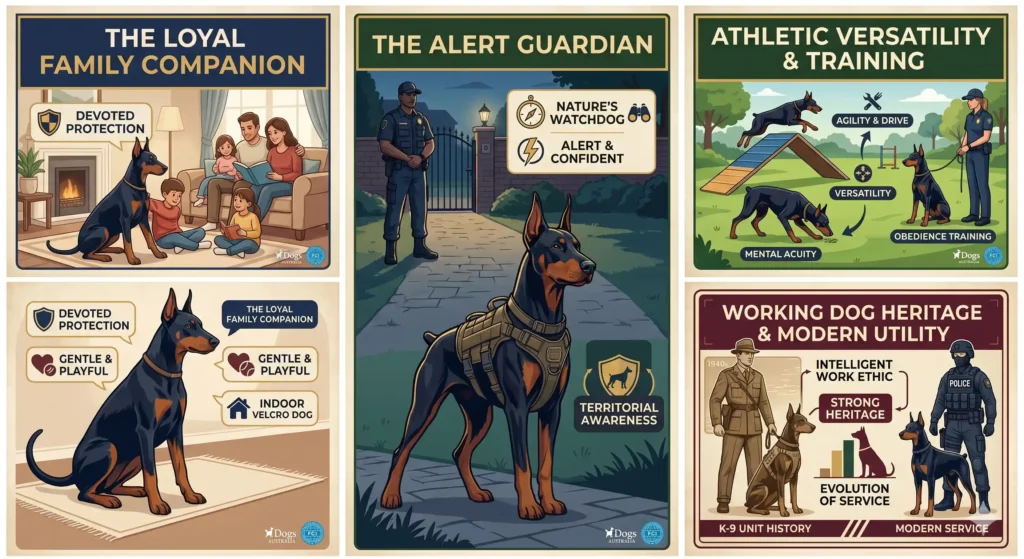
As dedicated breeders at Von Liston Dobermanns, we know the Doberman Pinscher (Dobermann) is one of the most intelligent and devoted working breeds in the world. Sleek, powerful, and deeply loyal, this breed combines athleticism with emotional sensitivity — making it an incredible companion for the right home.
But what is a Doberman really like to live with?
This complete guide covers:
- Doberman temperament and personality traits
- Care requirements and daily needs
- Family compatibility and child safety tips
- Australian legal and welfare considerations
- Health screening priorities for owners and breeders
- Practical advice for first‑time and experienced handlers
Doberman Temperament at a Glance
According to the official Dogs Australia Doberman standard, the Dobermann should be bold, alert, and self‑confident, with shyness or viciousness considered highly undesirable .
Core Personality Traits

✔ Highly intelligent
✔ Deeply loyal and bonded to family
✔ Naturally protective
✔ Energetic and driven
✔ Emotionally sensitive
Potential Challenges
⚠ Separation anxiety
⚠ Guarding behaviours if poorly socialised
⚠ Adolescent boundary testing
⚠ Boredom-related destruction
A properly bred and trained Doberman should be confident and stable — not unpredictable or excessively aggressive.
What to Expect From a Doberman at Home
1️⃣ Strong Family Attachment
Dobermans are often described as “velcro dogs.” They prefer being near their owners and thrive as indoor companions.
They are not suited to long-term isolation in a backyard.
In Australia’s varied climate, indoor living is also important for welfare — particularly during extreme heat or cold.
2️⃣ Protective — But Not Randomly Aggressive
Dobermans were originally developed as protection dogs, which explains their alert and watchful nature.
A well-socialised Doberman will:
- Bark to alert you
- Observe strangers carefully
- Look to the owner for direction
The Australian breed standard emphasises that unstable temperament is undesirable — meaning responsible breeding prioritises stability.
3️⃣ High Intelligence = High Responsibility
Dobermans rank among the most intelligent dog breeds.
This means:
- They learn quickly
- They remember routines
- They detect inconsistencies
Without mental stimulation, they may become destructive or anxious.
Doberman Care Guide

Exercise Requirements
Dobermans require:
- 60–120 minutes of daily activity
- Structured training sessions
- Mental enrichment (puzzle toys, scent work, obedience drills)
Australian heat management tip:
Exercise early morning or evening in hot regions (QLD, NT, WA). Always provide shade and hydration.
Training Approach
Best results come from:
✔ Reward‑based training
✔ Clear rules and boundaries
✔ Early socialisation
✔ Ongoing structured work
Avoid harsh, inconsistent corrections. Dobermans are sensitive and respond best to confident, calm leadership.
Grooming & Maintenance
- Weekly brushing
- Nail trims every 2–4 weeks
- Routine dental care
- Skin checks (especially in blue/fawn coats prone to sensitivity)
Because of their short coat, Dobermans may require protection in cooler climates (southern Australia, UK, Canada).
Dobermans & Family Life
With Children
Dobermans can be excellent family dogs when:
- Raised with boundaries
- Properly exercised
- Supervised with young children
They are powerful and energetic — supervision is essential.
With Other Dogs & Pets
Early socialisation improves compatibility.
Some Dobermans may display:
- Same‑sex dog intolerance
- High prey drive
Responsible introductions and training are critical.
Australian Legal Considerations
In Australia:
- Cosmetic ear cropping is illegal except for therapeutic reasons performed by veterinarians .
- Cosmetic Australian animal welfare laws nationwide in 2004, with limited veterinary exceptions .
Most Australian Dobermans have natural ears and tails.
Health & Wellness Priorities
1️⃣ Cardiac Health (DCM)
Dobermans are one of the breeds most commonly affected by Doberman cardiac health and DCM.
Veterinary cardiology guidance recommends screening, which may include:
- Holter monitoring
- Echocardiography
Breeders should prioritise cardiac screening in breeding stock.

2️⃣ Von Willebrand’s Disease (vWD)
A hereditary bleeding disorder commonly associated with Dobermans.
DNA testing is recommended for breeding programs.
3️⃣ Bloat (GDV)
Deep‑chested breeds like Dobermans are at higher risk.
Preventative tips:
- Split meals
- Avoid intense exercise after eating
- Discuss preventative options with your veterinarian
Is a Doberman Right for Your Lifestyle?
Ideal For:
✔ Active individuals
✔ Owners committed to daily training
✔ Families seeking a loyal guardian
✔ Experienced handlers
✔ Responsible breeders
Not Ideal For:
✖ Sedentary households
✖ Owners away long hours daily
✖ Inconsistent training environments
✖ People wanting a low‑maintenance pet
Family Tips for Raising a Balanced Doberman
- Start socialisation early (8–16 weeks critical window).
- Enroll in structured puppy classes.
- Maintain consistent household rules.
- Provide daily mental challenges.
- Avoid encouraging over‑protective behaviours.
- Schedule routine vet checks with cardiac awareness.
Frequently Asked Questions
Are Dobermans aggressive by nature?
No. The breed standard discourages shyness and viciousness . Proper breeding and training are key.
Are Dobermans good first dogs?
They can be — but only for owners willing to invest in training and exercise.
Do Dobermans bark a lot?
They are alert barkers but typically not excessive without cause.
Are Dobermans legal in Australia?
Yes. They are recognised by Dogs Australia and are not listed as restricted breeds.